
Nobody Told You What You're Paying For

I talked to a contractor a while back. Good outfit, busy, been around a long time.
His site had content on it that nobody at his company put there. I mentioned it. I wasn't pitching him, I just thought he'd want to know.
He said his marketing guy would deal with it.
That was three months ago. It's still there.
I don't think his marketing guy is a crook. I think nobody ever told this contractor what he's supposed to be getting for his money, so he had no way to know the difference between someone handling it and someone not. He just assumed.
That's most of you. You pay somebody every month. You're not totally sure what for. Here's the standard, so you can go measure yours against it.
You don't know if you don't have a report
Things get lost without reports.
And I want to be clear about what a report is for, because most people get this wrong. It's not there for you to read every line of. It's not there to make you feel good. You're not going to sit down with a coffee and study your bounce rate.
The report is there to give you direction, and it's there as proof that somebody looked.
That's the real job. Proof somebody looked.
Which means a boring report still tells you something. If six months of reports say nothing changed, you've learned something. If there are no reports at all, you've learned the most.
A report should do two things. It's a checkup, and it's a gap finder. Maybe the last time your site was touched was 2023 and we're in 2026 and the content has gone stale. Nothing on the site looks broken. It loads fine. It's just quietly three years old, and nobody flagged it.
That's what a report is supposed to catch.
Go check: When did you last get one? Can you find it in your email right now?
Have you checked your forms lately?
Say someone in your office changes the password on info@yourcompany.com. Totally reasonable thing to do. Happens all the time.
Except your website was using that account to send form submissions. Now it can't connect.
Guess what. You just missed every request that came in this weekend. And the one that came in Tuesday night. Nobody got an error. Nothing turned red. The form still says "thanks, we'll be in touch."
Jobs lost just because somebody didn't know the email was connected in a way that wasn't obvious.
That's the part that gets me. It's not negligence. It's nobody's fault. Which is exactly why it can run for months.
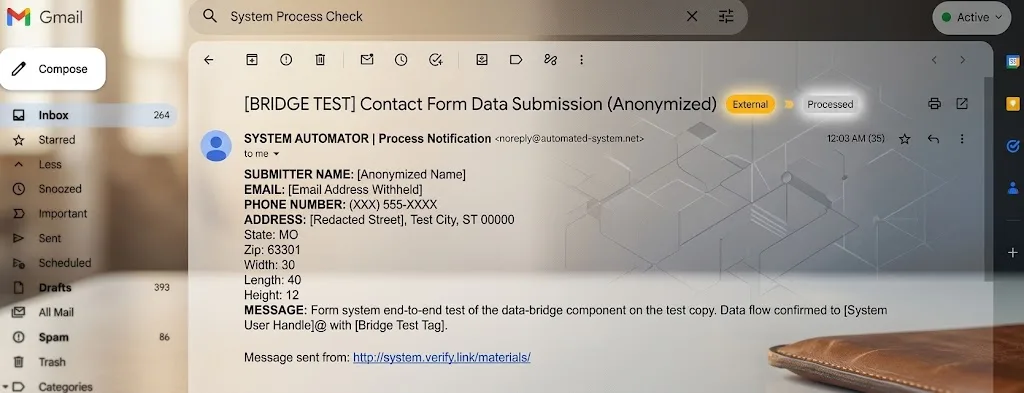
Go check: Fill out your own form. Right now, from your phone. See if it shows up. Then do it again next month. Takes two minutes and it's the only way you'd ever catch this.
If missed messages turn out to be a pattern rather than an accident, that is a different problem, and I went through it in catching the leads you never hear about.
Your site can't feed itself
Here's the part where I turn this around on you.
Everything above is what your guy owes you. This one's what you owe him.
A site goes stale because nobody feeds it. Photos from the job you just finished. A testimonial from the customer who was happy. "Hey, we do panel upgrades now." That's your half, and there's no version where your developer generates it out of thin air.
And it matters more than it used to. It's not that Google drops a site for sitting still. It's that your competitor down the road is publishing, and they pull ahead while you hold steady. Same ranking, worse position, and you never see it happen.
That slow slide is the whole reason I wrote your website ages like milk, not wine.
Go check: What's the last thing you sent your web guy? If you have to think about it, that's the answer.
So whose job is it?
Your developer can only work with what you give him.
This is where responsibilities always get lost in the mix. Is it the developer's job to get photos, or is it your job?
Usually it falls to you, unless you've got your own photographer. Then all you have to do is say "we want these on the site too."
That's it. That's the whole fix. Somebody just has to say out loud who does what, one time, and then it stops being a mystery why nothing's changed in eight months.
Go check: Do you know who's responsible for content on your site? If you and your developer would give different answers, there's your problem.
Is it yours, or are you renting it?
You're a busy contractor. You've got a thousand things going. The last thing you want is to deal with maintaining a domain.
But it's really not that critical, and it's not that difficult.
The easy version: you buy the domain. It's in your name, on your credit card, in your account. Then you add your developer as a delegate so he can make the changes he needs to make. He gets the access. You keep the keys.
Here's how that works at the two registrars most of you are on:
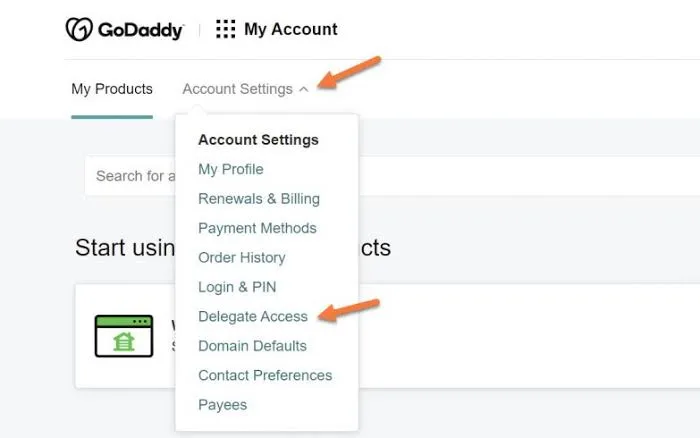
The reason this matters is separation. The divorce, if it happens, is cleaner.
But it's only cleaner if you can actually get to your website content. So:
Are you on WordPress? Fine, that moves.
Did they put you on Wix? Things get more complicated, and I went through exactly what a Wix or Squarespace site does and does not give you.
Did they hand code it? Is it even editable by anyone but them?
If the answer to all of that is "I don't know," you don't own a website. You're renting one, and you're renting it from someone who can change the price.
Go check: Log into your registrar. Right now. If you can't, that's your first phone call tomorrow.
The point
None of this is about finding a bad guy. Most web people aren't crooks, they're just quiet, and quiet looks exactly like nothing.
Reports, working forms, fresh content, clear responsibilities, and your name on your own stuff. That's the floor. Not the ceiling.
If you're getting all five, you're in good shape and you can stop reading.
If you're getting none of them, you've been paying for hosting and calling it marketing.
Not sure where you stand? Run your site through my free site analyzer, or send it over and I'll tell you which of the five you're missing.